

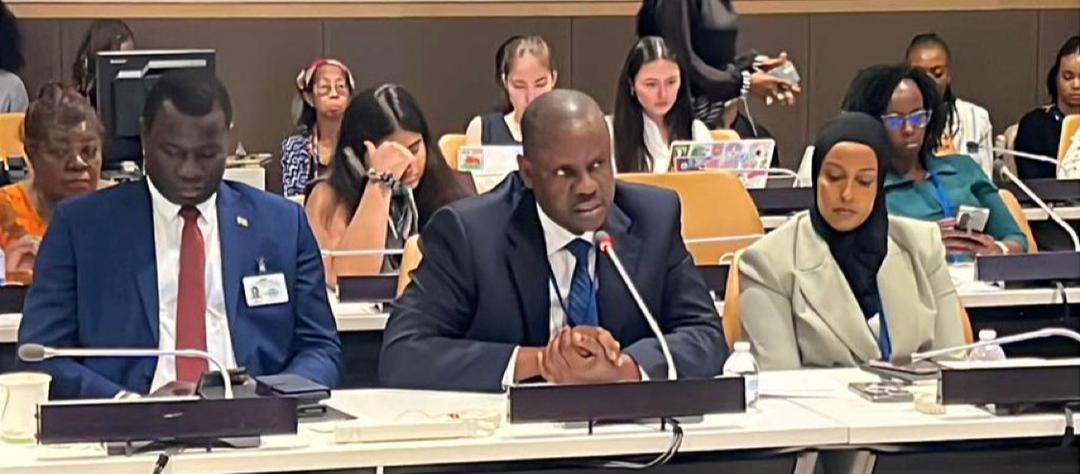
Uganda’s Minister of State for Youth and Children Affairs, Balaam Barugahara Ateenyi, has told global leaders that Africa’s future hinges on how effectively the continent addresses its growing youth employment challenge.
Speaking at a United Nations engagement, Balaam said Africa is at a defining moment, driven by rapid population growth and a youthful demographic that presents both opportunity and risk.
“Africa stands at a defining moment,” he said.
With the continent’s population projected to rise from over 1.4 billion to 2.5 billion by 2050—and nearly 70 percent under the age of 30—he warned of a widening gap between job creation and labour market entry.
According to Balaam, about 12 million young Africans join the workforce each year, while only around 3 million formal jobs are created.
“This gap is not merely an economic concern, but a pressing development and stability challenge,” he noted.
Drawing on Uganda’s experience, Balaam emphasized the need for deliberate strategies that connect young people to functional economic systems and move them from subsistence livelihoods into the money economy.
“Real transformation requires coordinated and deliberate action that connects young people to economic systems and enables a shift from subsistence livelihoods to meaningful participation in the money economy,” he said.
He highlighted key government interventions such as the Youth Livelihood Programme (YLP), the Parish Development Model (PDM), and the Emyooga Programme as critical in expanding access to finance and stimulating grassroots economic participation.
The minister also pointed to investments in Technical and Vocational Education and Training (TVET) and digital innovation hubs as essential in equipping young people with relevant, future-ready skills.
Balaam outlined three priority areas for Africa’s transformation: investing in future-ready skills, expanding access to financing for youth-led enterprises, and leveraging continental frameworks such as the African Continental Free Trade Area.
He further stressed the importance of involving young people in shaping policies that affect them, calling for stronger partnerships to drive inclusive growth.
“Africa’s transformation must be integrated, youth-centered, and driven by strong partnerships. The time to act is now,” he said.
